Top eCommerce Trends 2026
Discover what’s shaping the future of online stores.
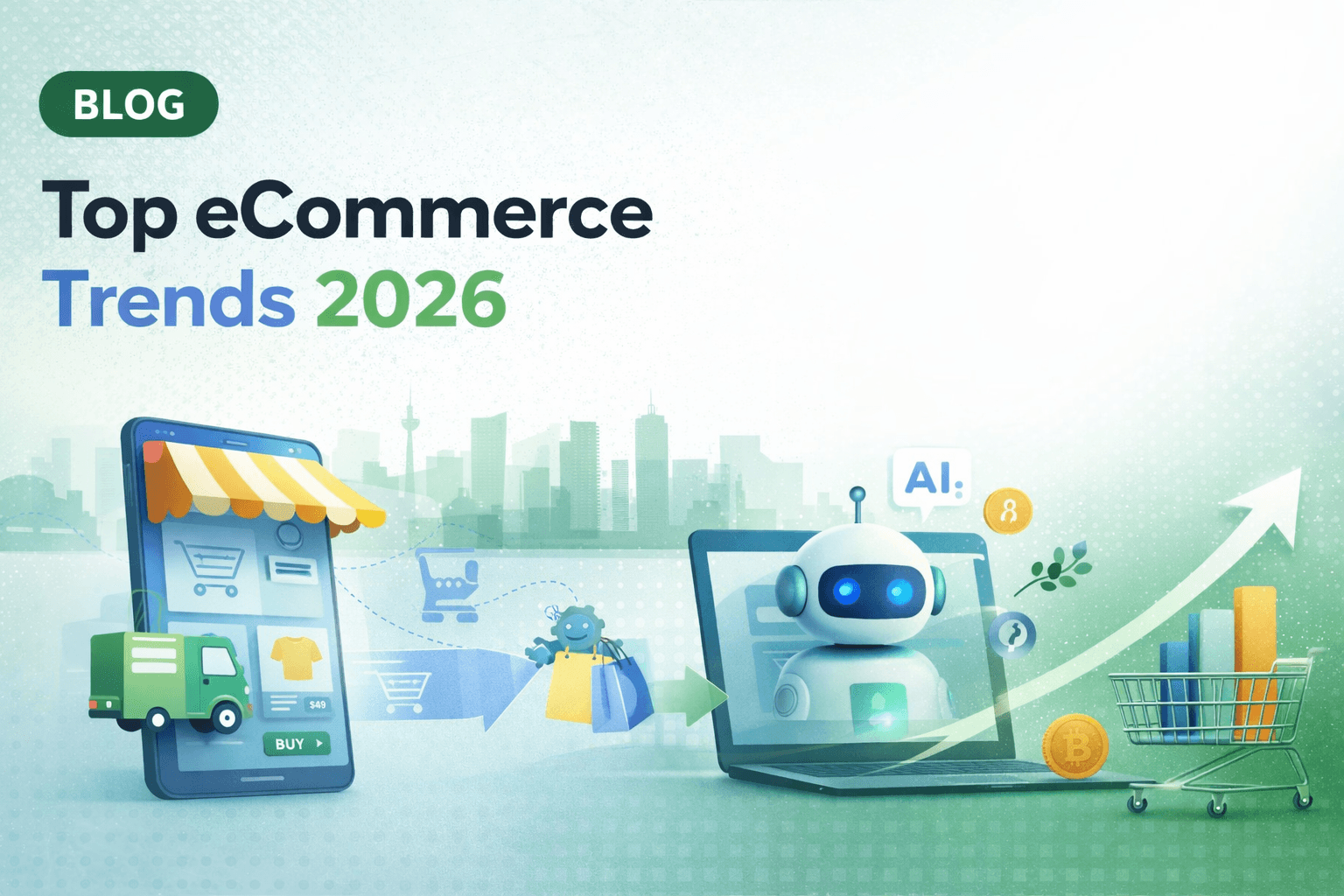
Top eCommerce Trends 2026: Future of Online Shopping
The ecommerce industry is evolving faster than ever. With new technologies, changing consumer behavior, and increasing competition, businesses must stay ahead of the curve to remain successful. In 2026, ecommerce is no longer just about selling products online—it’s about delivering personalized, seamless, and engaging shopping experiences.
In this guide, we’ll explore the most important ecommerce trends in 2026 that will shape the future of online businesses and help you stay competitive.
1. AI-Powered Personalization
Artificial Intelligence (AI) is transforming ecommerce by enabling personalized shopping experiences. AI analyzes customer behavior, preferences, and browsing patterns to recommend relevant products.
From personalized emails to product recommendations, AI helps increase engagement and conversions. Businesses that adopt AI-driven ecommerce strategies will have a competitive edge.
2. Voice Commerce Growth
With the rise of smart assistants like Alexa and Google Assistant, voice commerce is becoming more popular. Customers can search and purchase products using voice commands.
Optimizing your store for voice search with conversational keywords will be crucial for capturing this growing audience.
3. Mobile-First Shopping Experience
Mobile commerce continues to dominate. In 2026, most online purchases will happen on mobile devices.
Ensure your website is mobile-friendly, fast-loading, and easy to navigate. Mobile optimization is not optional—it’s essential.
4. Social Commerce Expansion
Platforms like Instagram, Facebook, and TikTok are becoming powerful sales channels. Social commerce allows users to discover and purchase products without leaving the app.
Brands that leverage social media marketing and influencer collaborations can drive massive traffic and sales.
5. Augmented Reality (AR) Shopping
Augmented Reality is changing how customers shop online. AR allows users to visualize products in real-world environments before purchasing.
This reduces returns and increases confidence in buying decisions, especially for fashion, furniture, and home decor products.
6. Faster Delivery Expectations
Customers now expect faster delivery than ever before. Same-day and next-day delivery are becoming standard.
Businesses must optimize logistics and partner with reliable shipping providers to meet customer expectations.
7. Sustainable and Ethical Shopping
Consumers are becoming more conscious about sustainability. They prefer brands that use eco-friendly packaging and ethical sourcing.
Highlighting your sustainability efforts can improve brand trust and attract loyal customers.
8. Subscription-Based Models
Subscription services are gaining popularity across industries. From beauty boxes to meal kits, recurring revenue models provide stability and customer retention.
Offering subscriptions can help increase lifetime customer value.
9. Advanced Payment Options
Flexible payment options like Buy Now Pay Later (BNPL), digital wallets, and cryptocurrencies are becoming common.
Providing multiple payment methods improves user experience and increases conversion rates.
10. Data-Driven Decision Making
Data is the backbone of ecommerce success. Businesses use analytics tools to track customer behavior, sales performance, and marketing effectiveness.
Using data-driven strategies helps optimize campaigns and improve ROI.
11. Omnichannel Shopping Experience
Customers interact with brands across multiple channels—websites, mobile apps, social media, and physical stores.
An omnichannel strategy ensures a consistent and seamless experience across all touchpoints.
12. Video Commerce Growth
Video content is becoming a powerful tool for ecommerce. Live streaming and product videos help customers understand products better.
Video marketing increases engagement and improves conversion rates.
13. Chatbots and Customer Support Automation
AI-powered chatbots provide instant customer support, improving response time and user satisfaction.
Automated support systems help businesses handle large volumes of queries efficiently.
14. Headless Commerce Architecture
Headless commerce separates the front-end and back-end, allowing businesses to create highly customizable user experiences.
This flexibility is ideal for scaling and integrating with modern technologies.
15. Hyper-Personalized Marketing
Marketing is becoming more targeted than ever. Personalized ads, emails, and offers based on user behavior improve engagement.
Businesses that invest in personalization will see higher conversion rates and customer loyalty.
Conclusion
The future of ecommerce in 2026 is driven by technology, personalization, and customer experience. Businesses that adapt to these trends will stay ahead of the competition and achieve long-term success.
Start implementing these strategies today to future-proof your ecommerce business and maximize growth opportunities.
Frequently Asked Questions
What are the top ecommerce trends in 2026?
Top ecommerce trends in 2026 include AI personalization, voice commerce, social commerce, AR shopping, and mobile-first experiences.
Why is AI important in ecommerce?
AI helps personalize user experiences, improve product recommendations, and increase conversions by analyzing customer behavior.
What is social commerce?
Social commerce allows customers to discover and purchase products directly through social media platforms like Instagram and Facebook.
How does mobile optimization impact ecommerce?
Mobile optimization improves user experience, reduces bounce rates, and increases conversions as most users shop via mobile devices.
What is AR in ecommerce?
Augmented Reality allows customers to visualize products in real environments before purchasing, improving confidence and reducing returns.
Why is fast delivery important?
Fast delivery improves customer satisfaction and increases the likelihood of repeat purchases.
What is omnichannel ecommerce?
Omnichannel ecommerce provides a seamless shopping experience across multiple platforms like websites, apps, and physical stores.
How do payment options affect conversions?
Flexible payment options like BNPL and digital wallets make it easier for customers to complete purchases, increasing conversion rates.
What is headless commerce?
Headless commerce separates front-end and back-end systems, allowing greater flexibility and customization.
How can businesses stay competitive in ecommerce?
Businesses can stay competitive by adopting new technologies, focusing on customer experience, and continuously optimizing their strategies.
🚀 Want to rank your Shopify store?
We help increase traffic, rankings & conversions.
Get Free Consultation